Understanding the Digital SIM Card You Buy Before You Travel
Prepaid eSIM Plans Unlocked Your Guide to Instant Connectivity
Losing roaming access or hunting for local SIM cards when traveling can be a hassle. A prepaid eSIM solves this by letting you purchase and activate a data plan from a global provider without needing a physical card. You simply scan a QR code or download the plan to your phone, instantly giving you connectivity. This makes staying online immediately available upon arrival in a new country.
Understanding the Digital SIM Card You Buy Before You Travel
Before you board that plane, understanding your prepaid eSIM means grasping what you’re actually buying. It’s not a physical card, but a digital profile that latches onto a local network the moment you land, often without you needing to fumble for a tray. I’ve watched friends download a travel eSIM from a provider like Airalo, only to realize the plan they chose expires in 30 days from activation, not from purchase. This connectivity hinges on your phone’s compatibility—ensure it’s unlocked. The data bucket is yours to use, but tethering may be blocked. For the Santiago metro, a 1GB plan lasted me four days of maps and WhatsApp, while a video call drained it in an hour. Check the “Fair Usage Policy” in tiny print; throttling can kill your roaming pace mid-search for a hostel.
How a Virtual Profile Differs from a Physical Plastic Card
A virtual eSIM profile differs from a physical plastic card by existing as a remotely downloadable software configuration, not a tangible chip. You purchase the profile online and activate it via a QR code or app, eliminating the need to insert or swap a physical SIM. Key practical distinctions include:
- Instant provisioning: A virtual profile activates in minutes, while a plastic card requires physical delivery and manual handling.
- No physical slot required: The profile lives in the device’s embedded chip, freeing the SIM tray for another card or being unnecessary on devices without one.
- Single-device binding: Unlike a plastic card you can move between phones, a virtual profile is tied to one device; reinstallation typically demands a new download.
The absence of a physical form factor also means you cannot lose or damage the profile—it is always stored securely in the device’s eUICC.
The Core Mechanics of Loading a Plan Without a Contract
Loading a prepaid eSIM plan without a contract is a purely digital, self-service process. You purchase a data bundle from a provider’s app or website, then scan a QR code to install the eSIM profile before your trip. Instant plan activation occurs when you arrive at your destination and toggle the eSIM line on, bypassing any carrier approval. There is no credit check, no long-term commitment, and no physical SIM swap. The mechanics rely entirely on your device’s eSIM capabilities and the provider’s back-end system, which remotely authorizes the profile. This eliminates waiting for a contract to start and lets you switch providers for the next journey effortlessly.
Q: Can I load the eSIM plan before I leave, even without a contract?
A: Yes, the system installs the eSIM profile immediately upon purchase; it simply remains dormant, waiting for you to activate data only when you choose, with zero contractual obligation.
Why Frequent Travelers Swear by This Technology
Frequent travelers swear by this technology because it eliminates the frantic hunt for local SIM cards upon arrival. Instead of juggling physical chips between devices, they activate connectivity before boarding, landing with instant data. This seamless switching between countries, without fees or new purchases, transforms multi-stop trips into stress-free journeys. They value keeping their primary number active for two-factor authentication while using a prepaid eSIM for cheap local rates. No more Airport kiosk queues or overpriced roaming; just consistent, on-demand service that adapts to spontaneous itinerary changes, making every trip smoother.
Key Advantages Over Traditional Roaming Packages
You land in a new country while your travel companions scramble to swap physical SIMs or hunt for local shops. With your prepaid eSIM, the instant connectivity is the first clear win. Traditional roaming packages often hit you with daily fees and surprise data caps—your eSIM plan is fixed, transparent, and you control exactly when it starts. There’s no confusing fine print about fair-use limits throttling your video calls. When a colleague’s carrier-cut roaming bundle runs out mid-upload, you’re still streaming maps and messages because your prepaid eSIM offers tailored local rates that bypass the old, bloated per-megabyte charges. It’s a seamless, budget-certain alternative to the legacy model.
Avoiding Surprise Bills and Hidden Carrier Fees
A primary advantage of prepaid eSIM is the complete elimination of surprise bills from roaming data. You pre-pay for a specific data allowance, meaning the service simply stops when the balance is exhausted, rather than incurring exorbitant per-MB roaming charges from your home carrier. This structure inherently avoids hidden carrier fees like daily “pass” activation costs or opaque administration surcharges. The key benefit is total cost transparency, where the price you see at purchase is the final price, with zero risk of unexpected overage charges upon return.
| Traditional Roaming Shock | Prepaid eSIM Assurance |
| Unlimited “pass” throttles then bills for data. | Hard cut-off at allowance, no overage billing. |
| Carriers add daily fees without itemization. | Single, upfront payment with no hidden surcharges. |
| Back-end rounding up of typical usage. | Precise, per-MB plan or fixed bucket. |
Instant Activation Without Visiting a Store or Kiosk
A primary advantage of prepaid eSIM is the elimination of physical retail visits. Activation occurs entirely online, with a QR code or app-based profile installation triggering service within minutes. This bypasses store hours, kiosk queues, and the need for a physical SIM card, enabling immediate connectivity upon arrival. The logical workflow—purchase, scan, connect—removes friction inherent in traditional roaming, where a physical trip to a vendor is mandatory. This digital provisioning model ensures the user’s first local action is not finding a shop, but using their device, fundamentally altering the pre-travel preparation sequence. The activation latency is reduced from hours to seconds.
Maintaining Your Home Number While Using a Secondary Line
Maintaining your home number while using a secondary line is a standout advantage of a prepaid eSIM. You keep your primary SIM active for calls and texts from friends or banks, while the secondary eSIM handles travel data. To set this up:
- Insert your home SIM and activate the prepaid eSIM for data.
- On your phone, designate the eSIM for cellular data for travelers.
- Forward calls from your home number to a VoIP app if needed, ensuring no missed connections.
This dual-line approach lets you stay reachable on your original number without paying roaming fees for its data, giving you seamless control over your communication.
Choosing the Right Provider for Your Needs
When you’re planning a backpacking trip through Southeast Asia, choosing the right provider for your needs with a prepaid eSIM comes down to your itinerary. I once landed in Bangkok with a plan to hop between Thailand, Vietnam, and Cambodia, so I needed a local provider that offered multi-country coverage without daily top-ups. The key was checking if the eSIM’s data allowance resets per trip, not per day, which saved me from overpaying for unused gigabytes. For short city stays, a regional plan from a provider like Airalo worked great, but for remote island hopping, I switched to a provider with stronger local network partnerships. Always match your provider’s coverage map to your exact stops.
Comparing Data Allowances Versus Validity Periods
When selecting a prepaid eSIM, you must compare data allowances against validity periods to avoid waste. A 50GB plan expiring in 7 days is useless for a month-long trip, while 5GB over 30 days suits light users. Your usage pattern dictates the optimal balance between these two metrics. For frequent streaming, prioritize high data over short validity; for sporadic messaging, a longer window with minimal data is better. High-allowance plans often hide steep per-GB costs if unused by expiration.
| Data Allowance | Validity Period | Best For |
|---|---|---|
| 10+ GB | 7–15 days | Heavy video calls, work uploads |
| 1–5 GB | 15–30 days | Light browsing, maps, messaging |
What to Look for in Network Coverage and Speed Limits
When evaluating a prepaid eSIM, scrutinize the provider’s network coverage maps for your specific destinations, as domestic roaming partnerships often create hidden dead zones. Assess speed limits by reading the fine print on “unlimited” plans; many throttle to 2G or 3G speeds after a data cap, rendering video calls or navigation unusable. Prioritize providers that clearly state peak speed thresholds (e.g., 5G vs. 4G LTE) and whether deprioritization occurs during congestion.
- Check if coverage relies on a single carrier or multiple local networks for redundancy.
- Identify the exact data cap where speeds are reduced, and confirm the reduced speed (e.g., 128 kbps vs. 1 Mbps).
- Look for disclosed latency figures, as high latency breaks real-time apps like VoIP or gaming.
- Verify whether “unlimited” plans include tethering restrictions that limit hotspot speed.
Top-Rated Apps and Platforms for Purchasing Plans

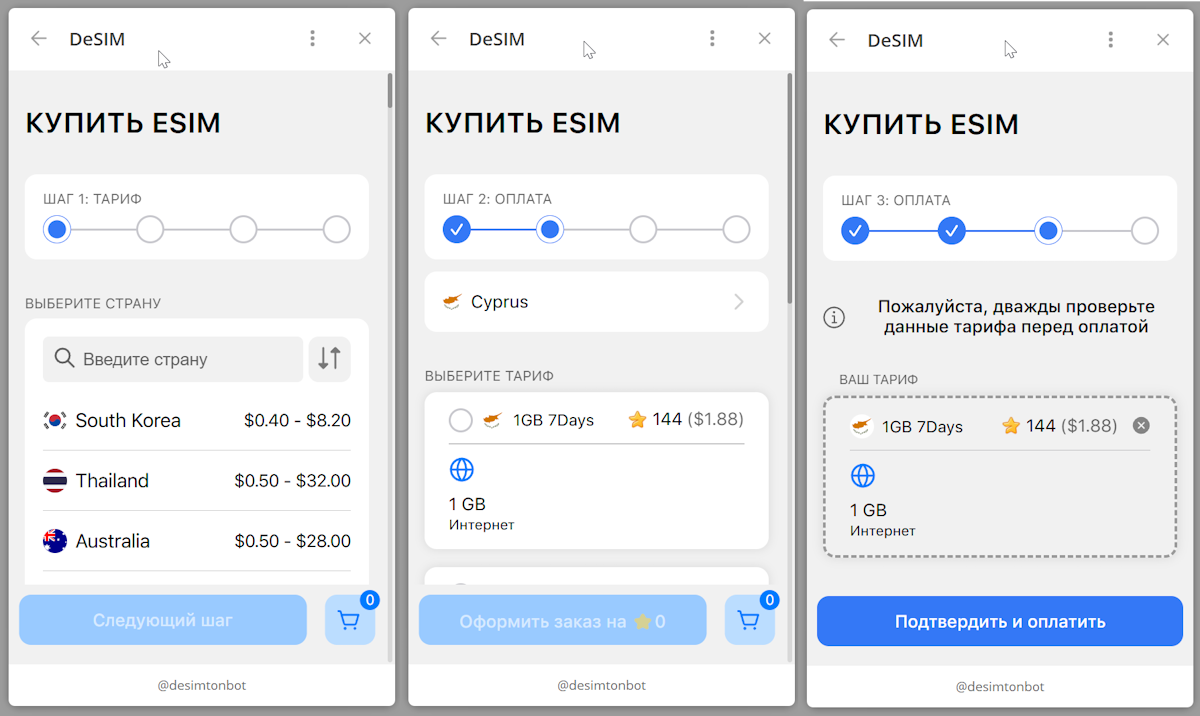
When evaluating top-rated prepaid eSIM platforms, functionality dictates choice. Airalo offers a streamlined interface for single-country and regional data packs, ideal for standard travel. Holafly differentiates with unlimited data plans, but its hotspot restrictions require verification before purchase. For multi-destination trips, Ubigi provides competitive bundle pricing and robust global coverage. MobiMatter acts as an aggregator, comparing plans across dozens of providers to surface the cheapest option per MB. First-time buyers should follow a clear sequence:
- Install the platform’s app and scan your device’s eSIM compatibility in settings.
- Use the platform’s built-in coverage map to verify 4G/5G support at your specific destination.
- Purchase a short-term starter plan (e.g., 1GB for 7 days) to test network performance before committing to a longer data package.
Each platform processes payment via credit card or PayPal immediately, delivering a QR code or direct installation link within minutes.
Device Compatibility and Technical Requirements
For a prepaid eSIM to work, your device must be both unlocked and eSIM-compatible, typically from a carrier that allows eSIM activation without a physical SIM. Most modern iPhones (XR and later), Google Pixels (3a and later), and Samsung Galaxy S20 and newer models support this. You’ll need a stable Wi-Fi or cellular data connection to download the eSIM profile during setup. A common question: *“Can I install a prepaid eSIM on a locked phone?”* Generally no—your device must be carrier-unlocked unless the eSIM is from that same carrier. Always check your phone’s IMEI or “Settings > About Phone” for eSIM eligibility before purchase.
Checking If Your Phone Supports an Embedded SIM
To verify prepaid eSIM compatibility, first check your phone’s settings: navigate to *Settings > Connections > SIM card manager* and look for an “Add eSIM” option. Alternatively, dial `*#06#`—if an EID number appears, your device supports an embedded SIM. Visit your manufacturer’s official support page, as many newer models from Apple, Google, and Samsung include this feature. Carrier-locked phones often block eSIM activation even if hardware supports it.
- Confirm your phone model is listed on the eSIM provider’s device checker.
- Ensure your phone’s software is updated to the latest version.
- For iPhones, verify the model is XR or newer; for Samsung, Galaxy S20 series or later.
Unlocked Versus Locked Handsets: What Works Best
For prepaid eSIM activation, an unlocked handset offers maximum flexibility, allowing you to download and switch between carrier profiles without restriction. A locked phone, typically tied to a specific postpaid contract, will reject eSIM profiles from other providers, making it incompatible with most prepaid eSIM services. Before purchasing a prepaid eSIM, verify your device’s carrier lock status in your settings. If locked, you cannot use a competing prepaid eSIM. Conversely, an unlocked phone supports any compatible prepaid eSIM plan, making unlocked handsets for prepaid eSIM the only practical choice for seamless multi-carrier access.
Dual SIM Configurations for Business and Personal Use
For professionals juggling work and life, prepaid eSIM dual SIM configurations let you assign one eSIM for business calls and another for personal data. You can keep your office line active on a physical SIM while a prepaid eSIM handles weekend streaming abroad. This setup ensures missed work notifications don’t interrupt family time, yet you never miss a urgent email. Simply toggle between profiles in your phone’s settings to separate contacts and billing.
- Assign a dedicated prepaid eSIM for personal browsing and a physical SIM for work calls.
- Switch off the business eSIM automatically during non‑work hours to enforce boundaries.
- Use a local prepaid eSIM for travel, while your home business number stays reachable.
Step-by-Step Guide to Setting Up Your Digital Line
First, confirm your device supports eSIM and is unlocked. Purchase a prepaid eSIM plan from a provider, then scan the delivered QR code or manually enter the activation details in your phone’s cellular settings. Label the new line (e.g., “Travel Data”) and set it as your default for mobile data, keeping your primary line for calls if needed. Test connectivity immediately by toggling airplane mode on and off.
Q: What if the QR code fails to scan? A: Manually enter the SM-DP+ address and activation code provided in your purchase confirmation.
Scanning a QR Code or Installing a Profile Manually
To activate your prepaid eSIM, you will typically scan the QR code provided in your confirmation email. Open your device’s cellular settings, select “Add Cellular Plan,” and point the camera at the QR code. If scanning fails, you can install the profile manually. Follow this sequence:
- In your email, locate the SM-DP+ address and activation code.
- In device settings, choose “Enter Details Manually.”
- Input the provided address and code, then confirm the installation.
After either method, the new line will appear in your settings, ready for data usage.
Managing APN Settings for Proper Data Routing
Managing APN settings for proper data routing begins with locating the correct APN profile provided by your prepaid eSIM carrier, as any deviation causes connection failure. Input the APN name, username, and password exactly as specified; incorrect entries will route data to dead ends. For dual-SIM devices, assign the prepaid eSIM’s APN as the primary mobile data profile to prevent routing conflicts with your other line. After saving, toggle Airplane Mode briefly to force the device to re-register with the network, verifying that the APN activates. Always test by loading a web page; if data fails, recheck the APN’s field values—common errors involve trailing spaces or wrong protocol (IPv4/IPv6). A mismatched APN on prepaid eSIMs results in no data throughput despite a signal bar.
| APN Field | Required Action | Routing Impact if Incorrect |
|---|---|---|
| APN Name | Enter carrier-provided string exactly | No data connection at all |
| Username/Password | Leave blank unless carrier specifies | Authentication fails, routing blocked |
| APN Protocol | Match carrier recommendation (usually IPv4) | Session drops or slow routing |
Troubleshooting Common Activation Errors
If activation fails, first double-check that your device is unlocked and the prepaid eSIM profile is correct for your region. A common culprit is a spotty Wi-Fi connection, so try switching to a stable network before scanning the QR code again. Sometimes, simply rebooting your phone after installing the profile resolves mysterious errors that no troubleshooting step seems to fix. If you’re still stuck, manually entering the activation code listed in your confirmation email often works when a QR scan doesn’t. For persistent prepaid eSIM activation errors, deleting the faulty profile and re-downloading it from your account is your most reliable fix.
Cost Analysis and Money-Saving Strategies
When analyzing costs for a prepaid eSIM, the primary money-saving strategy is comparing regional or global data packs against your carrier’s roaming rates, which are often inflated. You achieve direct savings by purchasing a local eSIM plan upon arrival, avoiding daily international add-on fees. A critical financial analysis shows that multi-country eSIMs for trips under 14 days almost always cost less than buying separate SIMs in each destination. To maximize savings, always assess your exact data usage; buying a 5GB plan when you need 2GB wastes money, while exceeding a 1GB plan triggers expensive top-ups. Furthermore, prepaid eSIM price locking protects you from currency fluctuation surcharges that postpaid plans often pass to users, ensuring your budget remains predictable.
Regional Plans Versus Global Packages: Which Offers Better Value
For most travelers, a regional prepaid eSIM plan offers better value than a global package when your itinerary is confined to a specific area like Europe or Southeast Asia. Regional plans provide significantly higher data caps and lower per-gigabyte rates by leveraging local network partnerships. Global packages, however, justify their higher price for multi-continent trips where you hop between countries with incompatible regional zones, eliminating the need to buy separate eSIMs. The better value depends on whether your route is concentrated or scattered.
- Assess your itinerary’s geographic concentration before choosing between a regional or global plan.
- Compare the total cost per gigabyte: regional plans usually win for single-region travel.
- Factor in multi-stop logistics: a global package can save money if you visit two or more separate regions.
- Check data speed tiers, as global packages often cap speeds lower than regional equivalents.
Stacking Promo Codes and Referral Discounts
Stacking promo codes with referral discounts on prepaid eSIMs can reduce costs beyond single-offer use. Apply a publicly available promo code first, then a unique referral link from an existing user—some providers allow this sequential combination. Test the checkout flow; not all brands support stacking, and terms often exclude multi-use. Prioritize platforms that explicitly permit layering, like those with “additional discount” fields. This approach requires verifying discount values, as fixed-percentage codes may override flat referral credits rather than additive stacking. Strategic promo code stacking demands reading fine print on promotion overlap to avoid nullifying both savings.
When Top-Ups Beat Buying a New Bundle Entirely
Renewing a travel eSIM through a top-up becomes more economical when you will stay in the same region or country for a second consecutive period. Instead of paying the base price for an entirely new bundle—which often includes a new activation fee—the top-up typically deducts only the cost of additional data. This strategy is particularly effective when you have leftover data from your initial plan; a top-up adds to that balance without resetting your validity window, preventing waste. Top-up cost efficiency peaks when carriers offer loyalty discounts on subsequent data packs, a discount rarely applied to a fresh bundle purchase.
Sector-Specific Applications Beyond Leisure Travel
In remote mining camps across Western Australia, a geologist relies on a prepaid eSIM from a local carrier to upload core sample data, avoiding the prohibitive roaming fees of her corporate plan. Similarly, a freelance photojournalist embedded with a humanitarian convoy in the Sahel swaps instantly to a regional prepaid eSIM for off-grid connectivity, keeping her images moving while local SIMs require physical visits.
For these professionals, a prepaid eSIM becomes a tactical tool for cost control and instant redundancy in field operations, not a leisure convenience.
An international trucker crossing EU borders uses a zone-based prepaid eSIM to route logistics apps without monthly contracts, while a maritime researcher activates a satellite-backed prepaid eSIM only when within coastal range, trimming operational overhead.
Using Temporary Profiles for Remote Work Stints
For remote work stints, using temporary eSIM profiles lets you maintain a local data connection without swapping physical SIMs. Immediately upon arrival, activate a short-term data plan from the eSIM provider to access work tools and cloud services. A clear sequence for setup includes:
- Purchasing a prepaid eSIM profile for your destination duration.
- Scanning the QR code or installing the profile via the provider’s app before departure.
- Designating the temporary profile as the primary data line in your device settings.
This approach avoids roaming fees and provides stable connectivity for tasks like video calls or file uploads, reverting easily to your home profile when the stint ends.
Connecting Fleet Devices and IoT Sensors Without Contracts
For fleet management and IoT sensor networks, prepaid eSIM eliminates long-term carrier lock-in. Contract-free IoT connectivity allows instant activation of telemetry units across global logistics, with data pools that expire rather than auto-renew. This is critical for seasonal fleets or temporary sensor deployments, like agri-tech soil monitors. A prepaid eSIM profile can be remotely switched between network operators without physical swaps, ensuring uplink redundancy for asset trackers. However, operators typically enforce a 90–365 day validity period; devices
must report within this window to retain balance. Below compares key operational constraints:
| Aspect | Prepaid eSIM (Contract-Free) | Traditional Fleet Contract |
|---|---|---|
| Data Expiry | Fixed, non-renewing pools | Monthly recurring allowance |
| Provisioning | Remote, instant via QR | Physical SIM logistics, carrier approval |
| Scalability | Per-device top-ups | Bulk billing, termination fees |
Emergency Connectivity for Students Studying Abroad
For students abroad, emergency connectivity via prepaid eSIM ensures immediate network access without physical SIM procurement. When a local SIM fails or is lost, a student can instantly purchase a data-only eSIM from their mobile device, bypassing language barriers or closed shops. This allows urgent calls over VoIP or navigation to safety. A prepaid eSIM’s instant activation eliminates reliance on foreign SIM registration delays, critical during crises like natural disasters or civil unrest.
- Activate a low-cost eSIM immediately upon losing primary SIM to contact family or embassy.
- Use eSIM for offline map downloads before entering areas with unreliable cell towers.
- Keep a separate eSIM profile loaded but not active, ready for one-tap enablement if primary network goes down.
Security and Privacy Considerations
Using a prepaid eSIM, your primary security risk revolves around profile theft. Unlike a Singapore eSIM physical SIM, an attacker cannot steal your eSIM by removing a card, but can potentially clone it if they compromise your device’s secure element or intercept the QR code activation. Always delete the eSIM profile from your phone before factory resetting or selling it to prevent unauthorized reuse. A common user question: “If I lose my phone, can someone reuse my prepaid eSIM profile?” Yes, unless you promptly deactivate it via your account dashboard. For privacy, prepaid eSIMs reduce your exposure because you never provide your real name or permanent address for activation, limiting the personal data stored by the carrier. However, network-level metadata (location, timestamps, destination IPs) is still logged, so use a VPN for sensitive activities.
How Virtual Cards Reduce Theft Risk Compared to Physical Slots
With a prepaid eSIM, your payment details are never tied to a physical SIM slot. If someone steals your phone, they cannot remove a physical card to access your account or make purchases. Instead, virtual card theft prevention works because the card number is encrypted and stored only in secure software. You can instantly freeze or delete a virtual card in your app, while a stolen physical SIM slot requires a carrier visit. This makes virtual cards inherently safer, as thieves cannot physically grab your billing info even if they take your device.
Ensuring Your Data is Encrypted During International Use
When hopping between international networks, a prepaid eSIM shifts the encryption burden onto your shoulders. Ensure your data is encrypted during international use by first activating end-to-end encrypted VPN services before connecting to any foreign tower. Your eSIM’s native carrier encryption only protects the link to their local tower, not the entire network path. To lock down your traffic on unpredictable public Wi-Fi and roaming relays, follow this sequence:
- Install and log into a trusted VPN app with a kill switch.
- Disable automatic connections to unknown carrier-partner towers.
- Test your VPN tunnel with a leak-check site before sending any sensitive data.
This layers your prepaid eSIM’s connectivity with autonomous encryption, keeping your activities opaque to intermediaries.
Understanding Provider Logs and What They Track
Understanding provider logs for prepaid eSIM means grasping exactly what data your digital carrier silently catalogs. Every connection attempt, data session, and top-up event generates a timestamped record. These logs typically capture your device’s IMEI, IP addresses assigned during sessions, and the specific APN configurations used. They track the geographic tower you pinged, volume of data consumed, and profile installation history. Prepaid eSIM logging practices differ because there is no permanent billing address—your usage pattern becomes your primary identifier. To control this trail:
- Audit your provider’s published logging policy before purchasing
- Use a VPN to mask IP addresses from session logs
- Delete eSIM profiles you no longer need to erase configuration data
Future Trends in Instant Mobile Connectivity
Future trends in instant mobile connectivity center on fully autonomous prepaid eSIM activation, where devices will self-provision data plans the moment you land, without scanning any QR code. This will eliminate the current friction of purchasing a pack before travel. Instead, your phone will automatically select the cheapest, high-speed local prepaid eSIM based on your destination and data habits.
The ultimate user insight is that connectivity will become a seamless utility, like air, turning the prepaid eSIM into an invisible, always-on fallback that activates and deactivates itself based on location and need.
This shift ensures zero downtime and immediate, device-native switching between networks, making travel truly plug-and-play.
The Shift Toward Subscription-Free Data Only Purchases
The shift toward subscription-free data-only purchases reframes prepaid eSIM as a disposable connectivity asset. Users now buy a specific gigabyte allotment with no recurring billing, expiry dates, or account management. This model prioritizes one-time utility, enabling travelers to purchase 5GB for a single trip then discard the eSIM profile entirely. The logic eliminates contract lock-in and overage fees, turning data into a transactional commodity rather than a service. Providers simplify acquisition to a QR scan, bypassing registration forms. The result is a frictionless, intent-based purchase—data exists solely for the moment it is needed, then vanishes.
- Select a fixed data bucket (e.g., 3GB) without any subscription tie-in
- Activate immediately via QR scan, with no personal account creation
- Use the purchased data until depleted, then delete the eSIM profile completely
Integration with Smartwatches and Laptop Modules
Prepaid eSIMs are evolving to natively embed directly into smartwatches and laptop modules, eliminating the need for a smartphone tether. This allows a smartwatch to field calls and stream music independently using its own prepaid data plan. For laptops, an integrated prepaid eSIM module provides instant, secure connectivity for work or travel without hunting for Wi-Fi. This device-level autonomy changes how users manage connectivity, as a single prepaid account can now provision separate data allowances across a watch, phone, and laptop. However, users must verify that their chosen prepaid eSIM provider offers a multi-device plan to avoid duplicating costs.
Q: Can I assign the same prepaid eSIM number to both my smartwatch and laptop?
A: No, prepaid eSIMs typically require a separate profile for each device, though some providers let you pool data from a single account across your watch and laptop modules.

Predictions for Carrier Aggregation and Multi-Standard Support
Predictions for carrier aggregation and multi-standard support in prepaid eSIMs point toward seamless bonding of fragmented spectrum across 4G, 5G, and upcoming 5G-Advanced bands. This will let a single prepaid eSIM dynamically combine low-band coverage with mid-band capacity, eliminating manual profile switching. Users on budget prepaid plans will automatically aggregate carriers from different network slices, ensuring consistent multi-gigabit speeds even in congested zones. Multi-standard support means the eSIM will simultaneously handle LTE, NR, and future 6G waveforms without user intervention. Q: Will carrier aggregation drain my prepaid eSIM’s battery faster? No—modern chipsets intelligently activate only needed carriers, often improving power efficiency compared to single-band connections.
